As global demand for clean and renewable energy continues to rise, solar power has become one of the most important pillars of the energy transition. At the heart of every solar power system lies a core component: the PV module. Understanding what a PV module is, how it is manufactured, and how it performs in real-world conditions is essential for anyone involved in solar project development, system design, or energy investment.
This article provides a comprehensive overview of what a PV module is, covering PV module types, manufacturing processes, efficiency comparison, installation considerations, and performance factors.
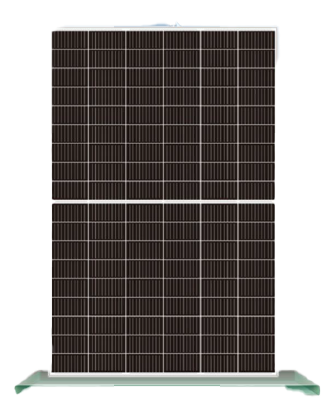
A PV module, short for photovoltaic module, is a device designed to convert sunlight directly into electricity using the photovoltaic effect. It consists of multiple solar cells electrically connected and encapsulated within a protective structure. When sunlight strikes the solar cells, electrons are released, generating direct current (DC) electricity.
It is important to distinguish between related terms:
PV cell: The smallest unit that converts sunlight into electricity
PV module: A group of interconnected PV cells packaged into a single unit
PV panel / PV array: One or more PV modules connected together to form a complete system
PV modules are widely used in residential, commercial, industrial, and utility-scale solar power systems, as well as emerging applications such as agri PV modules and building-integrated photovoltaics.
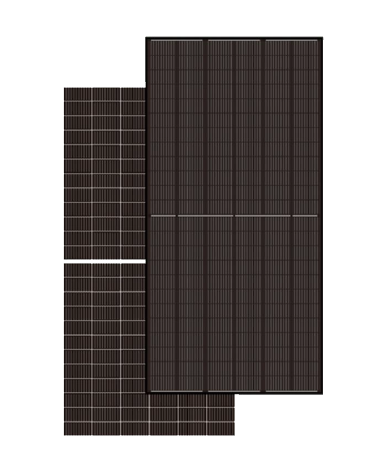
A modern PV module is a carefully engineered product composed of several layers, each playing a critical role in durability, efficiency, and safety:
Solar cells: Typically made from silicon (monocrystalline or polycrystalline)
Tempered glass: Protects cells from mechanical impact and weather
EVA encapsulant: Seals and cushions the cells
Backsheet or rear glass: Provides insulation and environmental protection
Aluminum frame: Enhances mechanical strength and facilitates mounting
Junction box and connectors: Enable safe electrical output
In advanced designs such as the dual glass PV module, the traditional backsheet is replaced with a second layer of glass, improving moisture resistance, fire safety, and long-term durability.
Different solar applications require different PV module technologies. Below are the most common and emerging PV module types available on the market.
A monocrystalline silicon PV module is made from single-crystal silicon wafers. These modules are easily recognized by their uniform dark color and rounded cell edges.
Advantages:
Higher efficiency (typically 20–23%)
Better performance in limited space
Longer lifespan and lower degradation rates
Disadvantages:
Higher manufacturing cost compared to poly modules
Monocrystalline PV modules are widely used in residential rooftops, commercial installations, and high-performance solar projects.
A polycrystalline PV module, also known as a poly PV module, is manufactured from multiple silicon crystals melted together.
Advantages:
Lower production cost
Mature and reliable technology
Disadvantages:
Slightly lower efficiency (typically 16–19%)
Larger installation area required for the same output
Despite being gradually replaced by mono technology, polycrystalline PV modules are still used in cost-sensitive projects and emerging markets.
A halfcut PV module uses solar cells that are cut in half, reducing internal resistance and power loss.
Key benefits:
Higher output power
Improved performance under partial shading
Lower operating temperature
Half-cut technology is now widely adopted in both monocrystalline and bifacial module designs.
A dual glass PV module features glass on both the front and rear sides.
Advantages:
Enhanced durability and moisture resistance
Better fire resistance
Suitable for harsh environments and long-term installations
Dual glass modules are commonly used in utility-scale power plants and coastal or desert regions.
Hybrid PV module: Combines electricity generation with thermal energy recovery (PV-T systems)
Perovskite PV module: An emerging technology offering high efficiency potential and low-cost manufacturing
Agri PV module: Designed for agricultural applications, allowing crops and solar generation to coexist
These innovative module types are shaping the future of the photovoltaic industry.
The production of a PV module involves multiple high-precision steps to ensure efficiency, reliability, and long-term performance.
The process begins with purifying raw silicon. For monocrystalline modules, a single-crystal ingot is grown, while polycrystalline modules use multi-crystal ingots.
Ingots are sliced into thin wafers. The wafer surface is textured to reduce light reflection and increase absorption.
Key steps include:
Doping to create positive and negative layers
Application of anti-reflective coatings
Electrical contact formation
Cell efficiency testing
Module Assembly
Solar cells are interconnected into strings, laminated with glass and encapsulant, framed, and fitted with a junction box.
Advanced testing such as electroluminescence (EL) testing, flash testing, and environmental stress testing ensures compliance with IEC and UL standards before shipment from a qualified PV module supplier.
PV module efficiency measures how much sunlight is converted into usable electricity. Higher efficiency means more power generated from the same surface area.
Monocrystalline silicon PV module: 20–23%
Polycrystalline PV module: 16–19%
Thin-film PV module: 10–14%
Perovskite PV module (lab level): Over 25% potential
Temperature coefficient
Cell technology and design
Shading and dust accumulation
Degradation over time
Proper installation is critical to maximizing PV module output and lifespan.
Rooftop systems (residential and commercial)
Ground-mounted systems
Solar tracking systems
Optimizing tilt angle, orientation, and series/parallel connections ensures compatibility with inverters and energy storage systems.
Grounding, surge protection, and compliance with local electrical codes are essential for safe operation.
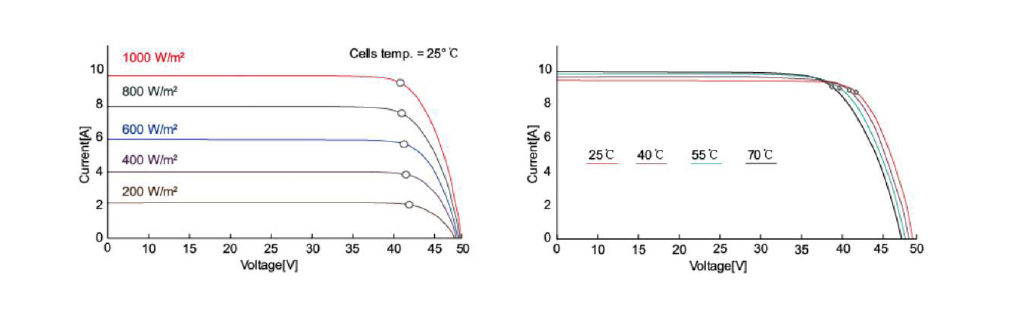
Rated power (Wp)
Temperature coefficient
Annual degradation rate
PV modules perform differently in hot, cold, dusty, or shaded environments. Technologies like half-cut and dual glass designs help mitigate performance losses.
Most PV modules are designed for 25–30 years of operation, with linear power warranties ensuring long-term energy yield.
A PV module is the fundamental building block of any solar power system. From traditional monocrystalline and polycrystalline technologies to advanced half-cut, dual glass, hybrid, and perovskite PV modules, the industry continues to evolve toward higher efficiency, durability, and smarter energy integration. Understanding PV module types, manufacturing processes, installation requirements, and performance factors enables better decision-making and long-term project success.
As a national high-tech enterprise dedicated to intelligent and eco-friendly industrial electrical solutions, YIFA Holding Group is a leader in smart photovoltaic generation and energy storage integration, delivering comprehensive solutions built around photovoltaic inverters, energy storage cabinets, and smart charging piles—empowering a cleaner and more sustainable energy future.

Explore together and create value together
We guide your information carefully