Circuit breakers are among the most critical protection devices in electrical power systems. Whether used in industrial facilities, substations, or power distribution networks, circuit breakers ensure operational safety by interrupting abnormal currents such as overloads and short circuits. Among the various technologies developed over the years, oil circuit breakers and vacuum circuit breakers represent two major generations of arc-interruption solutions.
As modern electrical systems move toward higher reliability, reduced maintenance, and environmental sustainability, understanding the difference between oil circuit breaker and vacuum circuit breaker has become increasingly important for engineers, project designers, and equipment buyers.
This article provides a detailed technical comparison covering working principles, performance characteristics, applications, and selection considerations.
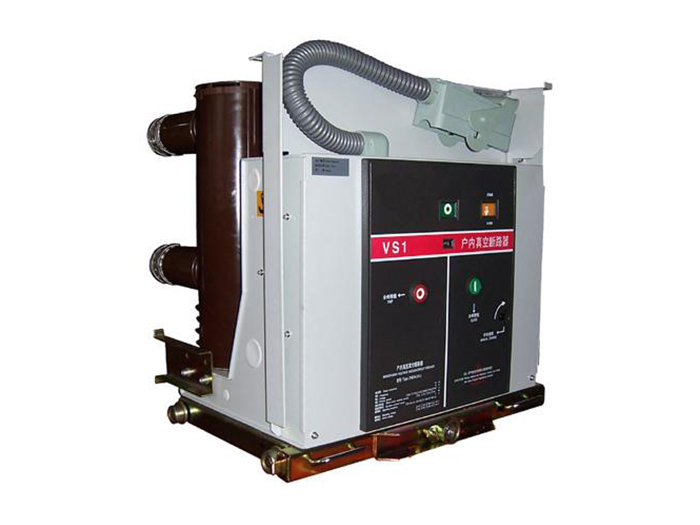
A circuit breaker is an automatic switching device designed to protect electrical systems by interrupting fault currents and isolating defective sections of a network.
Its primary functions include:
Interrupting short-circuit and overload currents
Protecting electrical equipment and personnel
Maintaining system stability
Enabling safe switching operations
A typical circuit breaker consists of:
Fixed and moving contacts
Arc extinguishing medium
Operating mechanism
Insulation structure
Control and protection system
The major difference between breaker technologies lies in the arc-quenching medium used during current interruption.
An oil circuit breaker uses insulating mineral oil as both the insulation medium and arc-extinguishing medium. When contacts separate under fault conditions, an electrical arc forms between them. The intense heat decomposes the surrounding oil into hydrogen gas, which cools and extinguishes the arc.
The oil simultaneously restores insulation strength between contacts after interruption.
1. Bulk Oil Circuit Breaker (BOCB)
Uses a large quantity of oil for insulation and arc extinction.
2. Minimum Oil Circuit Breaker (MOCB)
Uses oil mainly for arc interruption while insulation is provided externally.
Strong dielectric insulation
Effective arc suppression capability
Suitable for medium- and high-voltage applications
Historically dominant in substations and industrial systems
Oil circuit breakers were widely installed in:
Traditional substations
Heavy industrial facilities
Legacy power distribution systems
However, due to operational and environmental concerns, their usage has significantly declined.
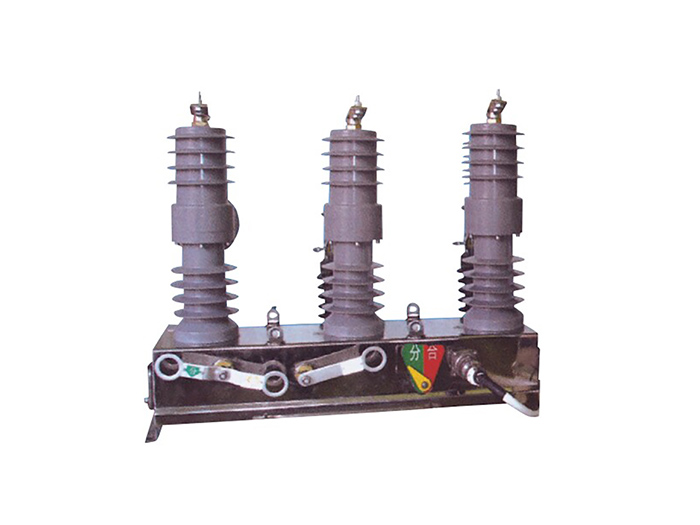
A vacuum circuit breaker (VCB) interrupts current inside a sealed vacuum chamber known as a vacuum interrupter. When contacts separate, an arc forms from metal vapor emitted by the contacts. Because there is no ionizable medium in vacuum, the arc extinguishes rapidly when current reaches zero.
Vacuum provides extremely fast dielectric recovery, preventing arc re-ignition.
Vacuum interrupter chamber
Fixed and moving contacts
Operating mechanism
Insulated enclosure
Modern systems include specialized designs such as:
Indoor vacuum circuit breaker
Switchgear vacuum circuit breaker
Air vacuum circuit breaker configurations
No oil or gas required
Extremely short arc duration
High mechanical endurance
Minimal maintenance requirements
Compact structure
Vacuum circuit breakers are now widely used in:
Medium-voltage distribution networks
Renewable energy plants
Industrial automation systems
Power utilities
Vacuum circuit breaker in substation installations
They are available in both indoor and outdoor configurations for flexible deployment.
Parameter | Oil Circuit Breaker | Vacuum Circuit Breaker |
Medium | Insulating oil | Vacuum |
Arc Cooling | Oil decomposition gas | Metal vapor extinction |
Recovery Speed | Moderate | Extremely fast |
Vacuum interruption technology enables faster and more reliable fault clearing.
Oil circuit breakers present inherent risks:
Oil leakage
Fire hazards
Explosion risk under severe faults
Vacuum circuit breakers eliminate these risks because no flammable medium is present, making them safer for modern installations.
Oil circuit breakers require frequent servicing:
Oil quality testing
Filtration or replacement
Contact inspection
In contrast, an indoor vacuum circuit breaker requires minimal maintenance due to its sealed interrupter design.
Reduced maintenance significantly lowers operational downtime.
Vacuum circuit breakers offer superior endurance:
Mechanical life exceeding 20,000–30,000 operations
High switching frequency capability
Stable interruption performance
Oil breakers experience faster contact wear and performance degradation over time.
High-performance solutions such as high voltage vacuum circuit breaker systems are particularly suited for repetitive switching applications.
Oil circuit breakers are bulky because they require large oil tanks.
Vacuum circuit breakers feature:
Compact construction
Reduced installation footprint
Easier integration into switchgear panels
This advantage is critical for modern switchgear vacuum circuit breaker systems used in urban substations and industrial plants.
Environmental considerations strongly favor vacuum technology.
Oil Circuit Breakers
Risk of oil contamination
Disposal challenges
Environmental hazards
Vacuum Circuit Breakers
Oil-free operation
Eco-friendly design
Compliance with modern environmental standards
Vacuum circuit breakers provide:
Consistent interruption performance
Stable dielectric strength
Reduced failure probability
This reliability makes them the preferred solution for critical infrastructure and renewable energy integration.
Cost Factor | Oil Circuit Breaker | Vacuum Circuit Breaker |
Initial Cost | Lower | Moderate |
Maintenance Cost | High | Very Low |
Lifecycle Cost | High | Lower |
Although oil breakers may have a lower initial price, vacuum breakers provide better lifecycle economics.
Application | Preferred Breaker |
Old substations | Oil Circuit Breaker |
Modern substations | Vacuum Circuit Breaker |
Industrial plants | Vacuum Circuit Breaker |
Renewable energy systems | Vacuum Circuit Breaker |
Smart grids | Vacuum Circuit Breaker |
Today, the vacuum circuit breaker in substation environments has become the industry standard.
Both indoor vacuum circuit breaker and outdoor high voltage vacuum circuit breaker solutions support flexible deployment across diverse operating conditions.
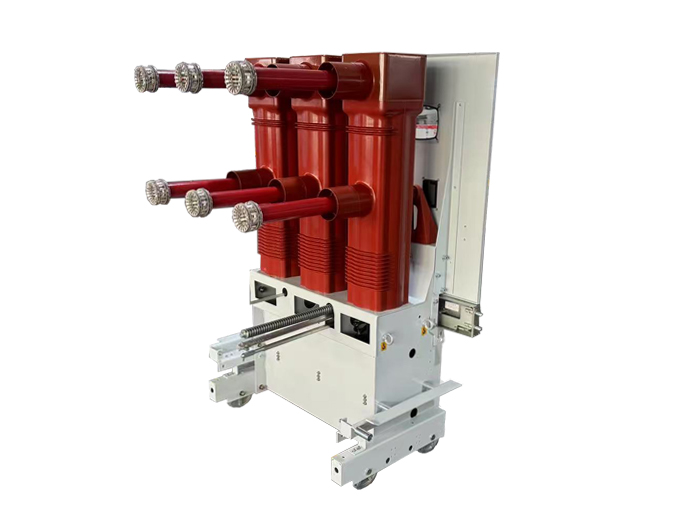
Several industry trends are accelerating this transition:
Increasing safety regulations
Environmental protection requirements
Reduced maintenance workforce availability
Growth of smart substations
Integration of renewable energy systems
Modern utilities increasingly prefer equipment supplied by a reliable vacuum circuit breaker manufacturer capable of delivering intelligent and maintenance-free solutions.
When selecting between oil and vacuum circuit breakers, engineers should evaluate:
Voltage level requirements
Installation environment (indoor or outdoor)
Switching frequency
Maintenance capability
Safety standards compliance
Long-term operating cost
For most modern projects—including industrial distribution, infrastructure, and renewable energy systems—a vacuum circuit breaker represents the optimal choice.
Understanding the difference between oil circuit breaker and vacuum circuit breaker is essential for designing safe, efficient, and future-ready electrical systems. While oil circuit breakers played a vital historical role in power distribution, vacuum circuit breakers now offer superior safety, reliability, environmental performance, and lifecycle economy.
With compact structures, minimal maintenance requirements, and excellent interruption capability, vacuum circuit breakers have become the preferred solution for modern substations, industrial facilities, and renewable energy infrastructures.
As a national high-tech enterprise dedicated to intelligent and eco-friendly industrial electrical solutions, YIFA Holding Group provides advanced power distribution technologies supporting modern energy systems. Through integrated solutions covering electrical equipment, smart photovoltaic generation, energy storage systems, and charging infrastructure, YIFA Holding Group continues to empower safer, smarter, and more sustainable global energy networks.

Explore together and create value together
We guide your information carefully